





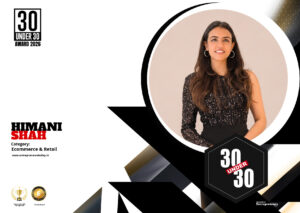
Himani Shah, Founder and Designer of Innaya Jewelry, a Hong Kong-based fine jewellery brand, believes that design should never be confined by a fixed set of rules. Drawn to jewellery for the creative freedom it offers, she moves effortlessly between contrasting aesthetics, from classic, minimalistic pieces to bold, sculptural designs that sit closer to art. Rather than confining the brand to a particular aesthetic, she has built it around the idea that jewellery should reflect the individuality of the person wearing it.
“If I can imagine it, I want to create it.”
At Innaya Jewelry, Himani aims to create pieces that appeal to customers at different stages of their jewellery journey, with varying tastes and sensibilities. The collection offers accessible, wearable designs for first-time fine jewellery buyers, alongside more exclusive creations for those with established collections who are looking for something distinctive and unexpected.
For Himani, the key lies in striking a balance between consistency and creative freedom.
“Balance is very important to me. I want Innaya to have its own design language, but I don’t want that language to be restrictive. Some pieces are timeless staples, the kind of jewellery you reach for constantly and eventually can’t imagine your collection without. Others are more expressive and unexpected, designed to make a statement, a conversation starter.”
Experimentation is central to her design philosophy. She explores scale, proportion, texture, colour and form, working with mixed gold colours, diamonds and coloured gemstones, unusual diamond cuts, and details that introduce movement or transform a piece from different angles. Familiar jewellery silhouettes are often reinterpreted through unexpected combinations or subtle design interventions, allowing her to create pieces that feel both distinctive and wearable.
A New Voice in Fine Jewellery
“I wanted Innaya Jewelry to give people the freedom to create jewellery that felt truly theirs.”
Himani launched Innaya Jewelry after recognising a gap between the way younger consumers wanted to buy fine jewellery and what the traditional market offered. She observed that many young customers gravitated towards fashion jewellery because fine diamond jewellery could feel financially inaccessible, while contemporary designs that reflected their personal tastes were not always easy to find.
Customisation was another gap Himani recognised in the market. As consumers increasingly sought jewellery that reflected their individual tastes and personal stories, having a piece customised often felt inaccessible, with even minor alterations to existing designs potentially adding significantly to the cost. Himani wanted to challenge this perception by creating a brand where customers could bring an idea, a sketch, a story, or even a vague thought and simply ask, “Can we make this?”
“What I felt was missing was a younger, more personal voice in fine jewellery.”
Having grown up around diamonds, Himani understood the traditional foundations of the industry. At the same time, she recognised that a new generation was beginning to approach jewellery differently, placing greater emphasis on individuality, self-expression and personal significance.
Her vision was to bridge these two worlds: creating fine jewellery that felt contemporary and accessible without compromising on the intrinsic value of the category. For Himani, jewellery is rarely just an accessory. A single piece can represent a relationship, commemorate a milestone, celebrate an achievement or preserve a memory, acquiring greater meaning as it becomes part of someone’s story.
Carrying the Legacy
Jewellery was not always part of Himani’s career plans. She studied marketing and management at university and was drawn towards event management after graduation. Internships across insurance, finance and real estate subsequently exposed her to different industries and career possibilities. Over time, however, she realised that she wanted to pursue something that would allow her creative instincts to play a more central role.
Although she grew up in a family of diamantaires, entering the jewellery business was not something she had always envisioned. It was her father who encouraged her to pursue a GIA diamond course, an experience that ultimately changed her direction.
“I went into it wanting to understand diamonds better, and somewhere during that process everything clicked. I fell in love with diamonds, and jewellery would give me everything I had been looking for: creativity, design, storytelling and entrepreneurship.”
The experience brought together interests she had been exploring separately and introduced her to a field where creative expression and commercial ambition could coexist. What began as an opportunity to deepen her understanding of diamonds became the starting point for building a brand of her own.
Paying Homage to Indian Origins
India is deeply woven into Himani’s understanding of jewellery and continues to influence how she approaches design at Innaya Jewelry. She grew up with stories of maharajas, maharanis, and the jewellery associated with India’s royal families. Jewellery was never simply about adornment; it was intertwined with history, identity, celebration and the preservation of memories across generations.
What intrigues her most is the emotional significance of Indian jewellery. A piece can be gifted at a wedding, passed from a grandmother to a daughter, or worn to commemorate a significant moment. Its value extends beyond the materials themselves to the stories and relationships it carries. Rather than reproducing traditional Indian jewellery, she draws on this heritage. She further adds,
“I don’t necessarily want to recreate traditional Indian jewellery literally. I like taking that heritage and translating it into something contemporary. The influence might come through colour, craftsmanship, details, gemstone combinations or simply the idea of jewellery as an heirloom. My heritage gives me the vocabulary, and design gives me the freedom to reinterpret it. That’s the balance I try to create with Innaya.”
This interplay between heritage and modernity allows Himani to acknowledge its cultural roots while remaining open to experimentation. The result is an approach to jewellery that respects tradition without being restricted by it.
Innaya Jewelry’s Design Process
At Innaya Jewelry, every design begins with a story. Inspiration might emerge from a conversation, a piece of architecture, a particular gemstone or even a personal memory. Himani then translates that initial spark into a visual concept, considering both its creative potential and its relevance to the market.
Understanding how people live, dress and shop is an important part of this process. She pays attention to what customers are wearing, the requests they make and the ways their lifestyles and preferences are evolving. This allows her to balance creative experimentation with the practical considerations that determine whether a piece will resonate with its intended wearer.
Once an idea takes shape, she develops its silhouette, proportions, movement, texture and choice of metal, diamonds or coloured gemstones. Sometimes the stone itself becomes the starting point; on other occasions, the design comes first, with the right stone sourced to bring the concept to life. The design then moves into computer-aided design (CAD), where the proportions, settings and structural details are refined before production.
As the brand has grown, Himani has deliberately kept the core creative process close to herself. Alongside overseeing operations, client relationships, sourcing, marketing and strategy, she remains actively involved in design development, stone selection, CAD finalisation and quality control.
“I remain involved through sourcing, CAD, production and final quality control because I want the finished piece to retain the original intention.”
For her, this involvement is essential to ensuring that the finished piece remains faithful to the original concept, both aesthetically and technically.
Bespoke Fine Jewellery
For Himani, bespoke jewellery is rarely just about creating a piece. It is about translating a personal story into something tangible: marking a new chapter, commemorating someone important or preserving a moment that might otherwise exist only in memory.
The process begins with understanding the person behind the commission and what they want the piece to represent. That meaning can find expression through an unusual silhouette, a hidden detail, the arrangement of gemstones, an engraving or the way the jewellery is designed to be worn.
The brand also works with old gold, broken settings and loose or missing diamonds to transform existing jewellery into something new while preserving its sentimental value. Himani believes an heirloom need not remain in its original form to retain its significance. A setting can be reimagined, a silhouette modernised or an entire piece redesigned, allowing its story to continue in a form that feels relevant to a new generation. Reflecting on one of her earliest repurposing projects, she says,
“I remember it was for my mother. She had jewellery that she wanted to repurpose, and when I completed the transformation, seeing her reaction, and then seeing my grandmother’s reaction when she saw what had been created from jewellery that she had gifted, stayed with me. The piece wasn’t sold, exchanged or forgotten, it was given another chapter.”
The experience captured something fundamental to Himani’s approach: the idea that jewellery can evolve alongside the people who own it. Through thoughtful redesign, a piece can retain its emotional significance while becoming something that will be worn, appreciated and eventually passed on again.
The Business Behind Innaya Jewelry
Building Innaya Jewelry from the ground up has come with its share of self-doubt, with Himani often questioning whether the brand is growing quickly enough or whether people truly understand her vision. It is often the smaller, more personal moments that reassure her that she is on the right path. Seeing her family and friends speak about her brand with pride means a great deal, as does introducing herself to someone and hearing that they have already heard of the brand. She particularly cherishes the moments when she spots someone wearing her jewellery, knowing that a piece she envisioned and created has become part of another person’s life. For Himani, these are meaningful reminders that her brand, Innaya Jewelry is finding its place in the world.
Though, she does acknowledge that one of the challenges of running a fine jewellery business, is communicating the considerable work that goes into creating a finished piece. Customers may evaluate jewellery in terms of gold weight, diamond specifications and labour costs, but the process also involves design expertise, proportion, stone selection, concept development and the technical precision required to turn an idea into something structurally sound and aesthetically refined. Sourcing can be equally demanding, particularly when a client is looking for a specific shade of sapphire, an unusual diamond shape, a particular stone size or a precise combination of gemstones. Finding the right materials can require extensive searching across different markets and suppliers.
“A piece might look like “just a ring” from the outside, but behind that ring could be hours of design development, stone sourcing, CAD revisions, production coordination, finishing and quality control. Customers aren’t only paying for the materials. They’re paying for the creativity, expertise and craftsmanship that transform those materials into something meaningful. That’s something I think the industry can do a better job of communicating.”
Emerging Trends and Expansion
Himani sees the growing interest in 9K and 14K gold as part of a broader shift in consumer behaviour. With gold prices remaining high, buyers are exploring ways to make fine jewellery more accessible, whether through lighter designs, lower gold purities or alternative design approaches. She also points out that these preferences differ across markets. While 14K gold has traditionally been more prominent in the United States, higher-purity gold carries stronger cultural and traditional significance across Asian and Middle Eastern markets.
Rather than viewing the growing interest in lower-karat gold as a threat to traditional fine jewellery, Himani sees it as an indication that the industry must adapt to changing expectations. Greater transparency will be essential, ensuring that customers understand the gold purity, materials and craftsmanship they are purchasing instead of making decisions based on price alone.
Another area of growth for Innaya Jewelry has been men’s jewellery, an expansion prompted by a shift Himani was already noticing among her customers. The brand began receiving more bespoke enquiries from men, many of whom felt that options for genuine fine jewellery designed specifically for them remained limited.
For Himani, this reflects a wider change in how men approach personal style. Jewellery is increasingly becoming a means of self-expression, with customers seeking pieces that complement their personalities and lifestyles rather than conforming to a narrow definition of men’s accessories. She also sees considerable potential in gifting. Women looking to buy meaningful gifts for men have traditionally had a relatively limited range of options, often turning to watches, belts, wallets or silver jewellery. Himani wants to broaden those possibilities by creating a fine jewellery wardrobe for men, with designs that are contemporary, considered and distinctive in their own right.
“I don’t think men’s jewellery needs to be limited to one aesthetic. Just like women, men should be able to choose jewellery based on their personality, lifestyle and individual sense of style. Men’s jewellery shouldn’t be an afterthought to women’s jewellery. It deserves its own conversation.”
This philosophy reflects the broader ethos of the brand: jewellery should not be confined by conventional categories or preconceived ideas of who it is for. Whether designing for men or women, the objective remains to create pieces that allow individuals to express themselves on their own terms.
What’s Next
Looking ahead, Himani wants Innaya Jewelry to continue growing by identifying opportunities and unmet needs within the fine jewellery market. For her, expansion is not simply about introducing more products, the aim is to let the brand evolve alongside changing consumer preferences and the ways people shop, wear, and value jewellery, over time. For her, growth is about building a business flexible enough to respond to changing tastes.
That vision leaves room for Innaya Jewelry to expand into new categories while maintaining a consistent approach to design and craftsmanship. For Himani, that means creating pieces that become part of different moments in people’s lives, from everyday wear and personal milestones to jewellery passed down through generations. It is this flexibility, she believes, that will allow Innaya Jewelry to evolve over time. As she puts it, “Ultimately, I want Innaya Jewelry to be a brand full of possibilities.”